Mentoring Tips and Ideas
Here are a few ideas to help you think of ways to spend quality time with your
mentee:
Find Favorite Memories
Take a few moments to share a favorite story of growing up. Build a personal
connection over time that can be the foundation of your mentoring relationship.
Let it happen naturally. Find out what you both enjoy, what makes you laugh,
what kind of movies and books you like and topics you can talk about.
Expand Borders
Find out what kinds of things are outside of your mentee's comfort zone and
then set a plan to take them there. Maybe it’s a restaurant or a specific part
of the city. Maybe it’s a different type of movie or visiting the opera or a
play. Plan a time to take on those issues one at a time and break through the
self-imposed borders that plague our youth.
Read Together
If you have been involved in a mentoring relationship with a child for over six
months, try reading a book together. Probably no more than 150 pages on a
subject you both enjoy. If your mentee struggles with reading, make it part of
your meeting time and read together.
Learn Local History
Plan a short vacation in your own city. Many young people are unaware of the
history of their city. Schedule a day to visit important local sites with your
mentee. It could be a museum, a historical park, or even the old cemetery. You
can talk about what life used to be like, how people lived, what kind of
careers they might have had. Share stories of how you would like to be
remembered.
Source
Other places to look
Explore MN
Minnesota offers an endless array of things to do! Outdoor pursuits include fishing and boating, great golf, and some of the country’s best bike trails. There are excellent museums of all types, and options for live theater abound.
Tuesday, May 22, 2018

Monday, May 7, 2018
Do you want better health? VOLUNTEER!!
"Volunteering makes an
immeasurable difference in the lives of others. But did you know how much you
help yourself by giving back? From lowering stress to boosting self-confidence,
volunteering offers many health benefits—especially for older adults.
Just search the web: There are over
19 million hits for articles on how doing good helps people lead better,
healthier lives. Start reaping these mental and physical health benefits today:
- Decrease your risk of depression. Volunteering with and for others increases social interaction and helps build a support system based on common commitment and interests—both of which have been shown to decrease depression.
- Enjoy a sense of purpose and fulfillment—and increase your self-confidence while you’re at it!
- Stay physically and mentally active. A study released by Johns Hopkins University in 2009 revealed that volunteers actually increased their brain functioning. Volunteer activities get you moving and thinking at the same time.
- Reduce stress levels. By savoring your time spent in service to others, you’ll feel a sense of meaning and appreciation—both given and received—which can be calming.
- Experience “The Happiness Effect.” You know that feel-good sense you get after a vigorous workout? It comes from a release of dopamine in the brain. Helping others has that exact same effect—so the more you volunteer, the happier you become!
Get active now!"
"Research demonstrates that
volunteering leads to better health and that older volunteers are the most
likely to receive physical and mental health benefits from their volunteer
activities.
Volunteering, Life Satisfaction, and
Mental Health Why might we see a connection between volunteer activities and
longer and healthier lives? Evidence suggests that volunteering has a positive
effect on social psychological factors, such as one’s sense of purpose. In
turn, positive social psychological factors are correlated with lower risks of
poor physical health. Volunteering may enhance a person’s social networks to
buffer stress and reduce risk of disease. This connection between volunteering,
social psychological factors, and social networks has been captured by what has
been termed “social integration theory,” or “role theory,” which holds that an
individual’s social connections, typically measured by the number of social
roles that an individual has, can provide meaning and purpose to his or her
life, while protecting him or her from isolation in difficult periods. However,
research also suggests that volunteer activities offer those who serve more
than just a social network to provide support and alleviate stress; volunteering
also provides individuals with a sense of purpose and life satisfaction"
Thursday, March 29, 2018
10 MAGNIFICENT GAMES TO PRACTICE SOCIAL AND EMOTIONAL SKILLS WITH KIDS
What was
your favorite game to play as a kid? For me, it was Monopoly and Sorry. My
family and I played these games all the time!
My grandma taught me to play Gin Rummy and we would sit at her kitchen table
and play for hours! Are you looking for
a game to play with your mentee? Here
are some fabulous ideas!
***********************************************************************
Janine Halloran says “Part of why I wanted to be a therapist who works with kids is that it meant I got to play games for a living. It’s a great way to connect and learn about everyone who is playing. Plus it creates natural teachable moments to work on social skills.
10
MAGNIFICENT GAMES TO PRACTICE SOCIAL AND EMOTIONAL SKILLS WITH KIDS
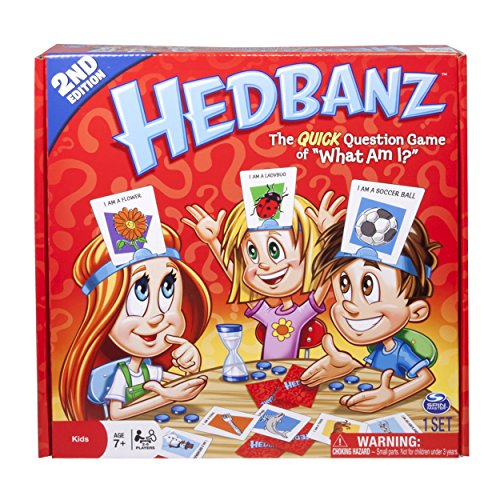
Hedbanz
You pick a
card, put it in your headband, and then ask the other people playing with you
yes or no questions to try and figure out what you are. You have to think of
the kinds of questions you need to ask to get you closer to your answer. This
is a wonderful game to work on perspective taking and communicating. Plus it
can be hilarious!
A Penny for Your Thoughts
If you're
looking for something a little bit more focused on social-emotional strengths
and helping kids cope with challenges, then try A Penny for Your Thoughts. This
is a great way to generate conversations about different situations that make
kids have big feelings. It's also a great way to talk about coping skills and
how to manage emotions in a safe and healthy way.
Q's Race to The Top
This is a
great game to not only to start conversations but also to get kids moving as
well. I love the interactive physical activities in this game because it can
help those kids who can't sit still for too long want to continue to play the
game. I wrote a whole review on this game here.
PeaceMakers
If you're
looking for something that's more focused on mindfulness and helping kids learn
about themselves, then PeaceMakers is a good game for you. The prompts on the
cards can help kids become aware of what's going on inside of them and what's
going on around them in the world. It
can also generate some interesting conversations. I've pulled out just one card
and started a conversation with my kids that was fascinating and helped me
learn more about them. What a great way to connect with others!
 Qwirkle
A fun game
where you are creating patterns out of colors or different shapes. We've made
some massive boards with this game, and it was a lot of fun. It helps kids
practice thinking flexibly because you can either match based on color or
pattern - which one you choose can change with each turn.
Listmania
I got this
game from Peaceable Kingdom, and it has been one of my go-to games since that
time. It’s a cooperative game where you work together and have fun. My family
and I played it for two weeks straight at every meal time. There are so many
questions that will make you laugh or groan or chuckle. Plus it’s easy to
learn, and you can play anywhere. There’s no board, just cards that give you
directions for how to play.
It’s super
simple but lots of fun and perfect for a game to bring on the go.
Cauldron Quest
Another
Peaceable Kingdom game that is a favorite of mine. You work together to get all
the ingredients in The Cauldron before you get caught by spells. It's pretty
easy to figure out the rules, and you work together to win the game as a whole
group.
Story Cubes
This game
encourages creativity, flexible thinking and working together to create a story
using nine cubes with different images. This game is excellent for small
groups!
Apples to Apples Junior
 This is
another game that is so much fun but also works on taking someone else’s
perspective. The winning card will
change depending on who is judging, so players have to adjust their thinking.
This is
another game that is so much fun but also works on taking someone else’s
perspective. The winning card will
change depending on who is judging, so players have to adjust their thinking.
Bubble Talk
This game
is similar to Apples to Apples but uses pictures and captions instead. Everyone
can take a turn being the judge, and the judge picks the caption that they
think fits the image best. You have to think about things from the perspective
of the judge, so it's another game to help children work on taking another
person's perspective.
Plane
As with
everything in life, game play doesn’t always go smoothly. People may not play by
the rules or may get upset when they lose or when someone else is celebrating
their win. That’s OK and expected! Nothing in life is perfect, including
playing games. Use those teachable moments to reinforce expected behaviors,
give feedback and model positive interactions. Start playing today!
From: https://www.encourageplay.com/blog/10-magnificent-games-to-practice-social-and-emotional-skills-with-kids
Thursday, March 1, 2018
Thinking about the the Future
Does
your mentee complain about school and homework? Wondering why they need
algebra or to be able to diagram a sentence? My kids do too!
Sometimes it's hard to explain to them the "whys" of learning.
I found some good advice for us all...
"If you want to see [a] child succeed, you need to show them the connection between today’s planning and tomorrow’s opportunities.
As an adult, it’s easy to look back and see how your choices in school influenced where you are today. But think back to your younger days. The future impact of your daily choices probably wasn’t as obvious to you back then.
I hear students of all ages saying things like: “Hey, it’s not that serious” or “My grades aren’t that serious” or “How I act in school is just not that serious.”
Listen—it is that serious. And one of my favorite ways to challenge the students I meet is by explaining how the choices they’re making today will be a serious factor in the caliber of their future."
https://www.anthonyoneal.com/personal-development/helping-kids-think-about-the-future/
What does their future hold? What do they see themselves doing someday? Do they know how to dream big? . It's never too early to start thinking about college!!
Here are some great tips:
"Prepare academically for college
It's not too early for college preparation. If you're in high school, enroll in the right classes, practice good study habits, stay organized and work on your writing skills.
* Take the right classes during high school
What are the right classes in high school? The courses required for college vary. Contact your guidance counselor to learn more, and check out these sites:
ACT,
Inc. recommendations (www.actstudent.org/college/plancourses.html) *The College Board
(SAT) recommendations (www.collegeboard.com/student/plan/high-school/33.html)
U.S. Department of Education recommendations (www2.ed.gov/pubs/Prepare/pt2.html)
Colleges want students with a well-rounded education. Take the more challenging classes so you can get a better idea of what college courses may be like.
* Practice good study habits
You may not know if your study habits are up to par with college courses. Start now. Practice good study habits, so when you're in college, you'll already have some effective tools under your belt.
Tips to improve your study skills:
U.S. Department of Education recommendations (www2.ed.gov/pubs/Prepare/pt2.html)
Colleges want students with a well-rounded education. Take the more challenging classes so you can get a better idea of what college courses may be like.
* Practice good study habits
You may not know if your study habits are up to par with college courses. Start now. Practice good study habits, so when you're in college, you'll already have some effective tools under your belt.
Tips to improve your study skills:
Stay
organized by making a "To Do" list. Stick to it.
Set goals for yourself.
Prioritize! A test tomorrow is more important than an assignment due next week.
Take good notes, and then be sure to review them carefully later.
Experiment a little. Where and when do you work best? Alone or in a group, bright or dim lighting, quiet or noisy? Then study that way!
* Improve your writing skills
Effective writing conveys your thoughts into words. It's a skill you use throughout your life, and no matter what career you pursue, the ability to communicate in writing will help you succeed.
Quick tips for effective writing:
Think about your audience. For example, you would use a different tone in an essay than you would in a note to a friend.
Set goals for yourself.
Prioritize! A test tomorrow is more important than an assignment due next week.
Take good notes, and then be sure to review them carefully later.
Experiment a little. Where and when do you work best? Alone or in a group, bright or dim lighting, quiet or noisy? Then study that way!
* Improve your writing skills
Effective writing conveys your thoughts into words. It's a skill you use throughout your life, and no matter what career you pursue, the ability to communicate in writing will help you succeed.
Quick tips for effective writing:
Think about your audience. For example, you would use a different tone in an essay than you would in a note to a friend.
Plan
ahead.
List
important points in the order you wish to make them.
Use a strong opening sentence to catch the reader's attention.
Be clear and to the point. Edit out unnecessary words and information.
Read through your writing for spelling errors and typos. Spell check programs don't catch everything!"
Use a strong opening sentence to catch the reader's attention.
Be clear and to the point. Edit out unnecessary words and information.
Read through your writing for spelling errors and typos. Spell check programs don't catch everything!"
https://mappingyourfuture.org/successincollege/collegeplan.cfm
The
bottom line is, according to Benjamin Franklin
“An
investment in knowledge pays the best interest.”
Subscribe to:
Posts (Atom)