Thursday, March 29, 2018

10 MAGNIFICENT GAMES TO PRACTICE SOCIAL AND EMOTIONAL SKILLS WITH KIDS

What was your favorite game to play as a kid? For me, it was Monopoly and Sorry. My family and I played these games all the time!  My grandma taught me to play Gin Rummy and we would sit at her kitchen table and play for hours!  Are you looking for a game to play with your mentee?  Here are some fabulous ideas!


***********************************************************************

Janine Halloran says “Part of why I wanted to be a therapist who works with kids is that it meant I got to play games for a living. It’s a great way to connect and learn about everyone who is playing. Plus it creates natural teachable moments to work on social skills.


10 MAGNIFICENT GAMES TO PRACTICE SOCIAL AND EMOTIONAL SKILLS WITH KIDS
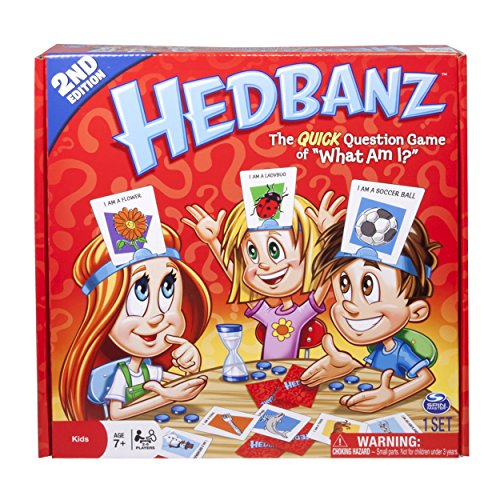
Hedbanz
You pick a card, put it in your headband, and then ask the other people playing with you yes or no questions to try and figure out what you are. You have to think of the kinds of questions you need to ask to get you closer to your answer. This is a wonderful game to work on perspective taking and communicating. Plus it can be hilarious!

A Penny for Your Thoughts
If you're looking for something a little bit more focused on social-emotional strengths and helping kids cope with challenges, then try A Penny for Your Thoughts. This is a great way to generate conversations about different situations that make kids have big feelings. It's also a great way to talk about coping skills and how to manage emotions in a safe and healthy way.

Q's Race to The Top
This is a great game to not only to start conversations but also to get kids moving as well. I love the interactive physical activities in this game because it can help those kids who can't sit still for too long want to continue to play the game. I wrote a whole review on this game here.

PeaceMakers
If you're looking for something that's more focused on mindfulness and helping kids learn about themselves, then PeaceMakers is a good game for you. The prompts on the cards can help kids become aware of what's going on inside of them and what's going on around them in the world.  It can also generate some interesting conversations. I've pulled out just one card and started a conversation with my kids that was fascinating and helped me learn more about them. What a great way to connect with others!

Qwirkle
A fun game where you are creating patterns out of colors or different shapes. We've made some massive boards with this game, and it was a lot of fun. It helps kids practice thinking flexibly because you can either match based on color or pattern - which one you choose can change with each turn.

Listmania
I got this game from Peaceable Kingdom, and it has been one of my go-to games since that time. It’s a cooperative game where you work together and have fun. My family and I played it for two weeks straight at every meal time. There are so many questions that will make you laugh or groan or chuckle. Plus it’s easy to learn, and you can play anywhere. There’s no board, just cards that give you directions for how to play.

 It’s super simple but lots of fun and perfect for a game to bring on the go.
 
Cauldron Quest
Another Peaceable Kingdom game that is a favorite of mine. You work together to get all the ingredients in The Cauldron before you get caught by spells. It's pretty easy to figure out the rules, and you work together to win the game as a whole group.

Story Cubes
This game encourages creativity, flexible thinking and working together to create a story using nine cubes with different images. This game is excellent for small groups!

Apples to Apples Junior
This is another game that is so much fun but also works on taking someone else’s perspective.  The winning card will change depending on who is judging, so players have to adjust their thinking. 

Bubble Talk
This game is similar to Apples to Apples but uses pictures and captions instead. Everyone can take a turn being the judge, and the judge picks the caption that they think fits the image best. You have to think about things from the perspective of the judge, so it's another game to help children work on taking another person's perspective.

Plane
As with everything in life, game play doesn’t always go smoothly. People may not play by the rules or may get upset when they lose or when someone else is celebrating their win. That’s OK and expected! Nothing in life is perfect, including playing games. Use those teachable moments to reinforce expected behaviors, give feedback and model positive interactions. Start playing today!  

From: https://www.encourageplay.com/blog/10-magnificent-games-to-practice-social-and-emotional-skills-with-kids


Thursday, March 1, 2018

Thinking about the the Future


Does your mentee complain about school and homework?  Wondering why they need algebra or to be able to diagram a sentence?  My kids do too!  Sometimes it's hard to explain to them the "whys" of learning.  I found some good advice for us all...

"If you want to see [a] child succeed, you need to show them the connection between today’s planning and tomorrow’s opportunities.

As an adult, it’s easy to look back and see how your choices in school influenced where you are today. But think back to your younger days. The future impact of your daily choices probably wasn’t as obvious to you back then.

I hear students of all ages saying things like: “Hey, it’s not that serious” or “My grades aren’t that serious” or “How I act in school is just not that serious.”

Listen—it is that serious. And one of my favorite ways to challenge the students I meet is by explaining how the choices they’re making today will be a serious factor in the caliber of their future."

https://www.anthonyoneal.com/personal-development/helping-kids-think-about-the-future/

What does their future hold?  What do they see themselves doing someday?  Do they know how to dream big?  . It's never too early to start thinking about college!!
Here are some great tips:

"Prepare academically for college

It's not too early for college preparation. If you're in high school, enroll in the right classes, practice good study habits, stay organized and work on your writing skills.

* Take the right classes during high school

What are the right classes in high school? The courses required for college vary. Contact your guidance counselor to learn more, and check out these sites: 
ACT, Inc. recommendations (www.actstudent.org/college/plancourses.html) *The College Board (SAT) recommendations (www.collegeboard.com/student/plan/high-school/33.html)
U.S. Department of Education recommendations (
www2.ed.gov/pubs/Prepare/pt2.html)
Colleges want students with a well-rounded education. Take the more challenging classes so you can get a better idea of what college courses may be like.

* Practice good study habits
You may not know if your study habits are up to par with college courses. Start now. Practice good study habits, so when you're in college, you'll already have some effective tools under your belt.
Tips to improve your study skills:
Stay organized by making a "To Do" list. Stick to it.
Set goals for yourself.
Prioritize! A test tomorrow is more important than an assignment due next week.
Take good notes, and then be sure to review them carefully later.
Experiment a little. Where and when do you work best? Alone or in a group, bright or dim lighting, quiet or noisy? Then study that way!

* Improve your writing skills
Effective writing conveys your thoughts into words. It's a skill you use throughout your life, and no matter what career you pursue, the ability to communicate in writing will help you succeed.
Quick tips for effective writing:
Think about your audience. For example, you would use a different tone in an essay than you would in a note to a friend.
Plan ahead.
List important points in the order you wish to make them.
Use a strong opening sentence to catch the reader's attention.
Be clear and to the point. Edit out unnecessary words and information.
Read through your writing for spelling errors and typos. Spell check programs don't catch everything!"

https://mappingyourfuture.org/successincollege/collegeplan.cfm

The bottom line is, according to Benjamin Franklin
“An investment in knowledge pays the best interest.”


Monday, February 5, 2018

New Years Resolutions and Habits


Did you make any New Year’s resolutions this year? How are you doing with them if you did? The beginning of the year is such a great time to start new habits and rhythms in our lives. But it’s also hard! Have you talked with your mentee about anything they are trying to change in their lives? Do you see an area where they could possibly begin a new habit to help them? What does it take to effectively change our habits and develop routines that work for our lives?


There is some good research out there to help us create new habits and change or modify old ones. I’m going to share some of the latest research on habit formation I have found helpful. My hope is that you’ll walk away from reading this ready to evaluate you and your mentee's habits and routines and confidently work toward improving the areas that matter most to you this year.

Here are two interesting articles on how to put into practice a new habit. Take a look and comment below, add anything you find helpful or share any resources or ideas you might have! We can all learn from each other. Thanks for reading and have a great day!!

*******************************************************************************************

The 3 R’s of Habit Change: How To Start New Habits That Actually Stick
By James Clear | Behavioral Psychology, Habits Your life today is essentially the sum of your habits.

How in shape or out of shape you are? A result of your habits.

How happy or unhappy you are? A result of your habits.

How successful or unsuccessful you are? A result of your habits.

What you repeatedly do (i.e. what you spend time thinking about and doing each day) ultimately forms the person you are, the things you believe, and the personality that you portray.

But what if you want to improve? What if you want to form new habits? How would you go about it?

Turns out, there's a helpful framework that can make it easier to stick to new habits so that you can improve your health, your work, and your life in general.

Let's talk about that framework now…

Before we talk about how to get started, I wanted to let you know I researched and compiled science-backed ways to stick to good habits and stop procrastinating. Want to check out my insights? Download my free PDF guide “Transform Your Habits” here.
The 3 R’s of Habit Change

Every habit you have — good or bad — follows the same 3–step pattern.
Reminder (the trigger that initiates the behavior)
Routine (the behavior itself; the action you take)
Reward (the benefit you gain from doing the behavior)

I call this framework “The 3 R's of Habit Change,” but I didn't come up with this pattern on my own. It’s been proven over and over again by behavioral psychology researchers.


All habits form by the same 3–step process. Here's an example: the traffic light turns green, you drive through the intersection, you make it closer to your destination. Reminder, routine, reward. (Graphic based on Charles Duhigg's “Habit Loop” in The Power of Habit. Created by James Clear.) How can you use this structure to create new habits and actually stick to them?
https://jamesclear.com/three-steps-habit-change

Here is the Second Article:

How Habits Work

From the appendix to The Power of Habit:
Change might not be fast and it isn’t always easy. But with time and effort, almost any habit can be reshaped.

THE FRAMEWORK:

Identify the routine

Experiment with rewards

Isolate the cue

Have a plan


Obviously, changing some habits can be more difficult. But this framework is a place to start. Sometimes change takes a long time. Sometimes it requires repeated experiments and failures. But once you understand how a habit operates – once you diagnose the cue, the routine and the reward – you gain power over it.

http://charlesduhigg.com/how-habits-work
All Content © 2018 Charles Duhigg | Disclosure Policy | Site by Out:think

Thursday, January 4, 2018

Watching Movies Together

  I like to talk to my kids about what they are watching, on TV and at the movies.  I love it when books are turned into movies so we can read it first and then watch the movie and discuss how it changed and the creative license they used to make it a movie and why.  What about the book would not have been good in a movie and what did they add to make it better?  Or was it not as good as the book?  Talking to your mentee after a movie can have great benefits!  Just read the article below!!

Mentors can help their mentees get the most out of the movies they watch

Posted by 
Children can benefit from both the positive and negative themes of a movie by watching and discussing the film with a parent or other adult, research shows.
Researchers analyzed popular children’s movies and ranked their most common positive and negative themes. While the most common positive theme was the importance of helping and protecting others, the use of guns and other weapons topped the list of negative themes.
Victoria Heasley, a medical student in the Penn State College of Medicine, says she and the other researchers wanted to highlight how children can gain powerful insights from the themes in movies with the help of coviewing, or watching and discussing the film with a parent or other adult.

(Credit: Katie Bohn/Penn State)
“Parents often want to talk about negative themes they see in movies, like drugs or violence, and they absolutely should,” Heasley says. “But it’s also important to talk about positive themes, like how the characters worked together to solve a problem. If you talk about the negative while also capitalizing on the positive, it can be a very productive discussion.”
Previous research has shown that positive messages in movies can be boost cooperation, empathy, and other traits in young viewers. But the American Academy of Pediatrics also warns that violence in the media could result in aggression and bullying, among other ill effects.
Robert Olympia, professor of emergency medicine and pediatrics in the Penn State College of Medicine, says he hoped that by getting a clearer snapshot of the themes in popular children’s movies, it would help parents make better decisions about what their kids watch while ensuring the kids also learn some valuable life lessons.
(Credit: Katie Bohn/Penn State)
The researchers narrowed the study’s focus to 45 of the top-grossing films from 2005 to 2015. They selected 15 G-rated movies, 15 PG-rated movies and 15 PG-13-rated movies before creating a list of themes they would track in each film. The researchers then analyzed each movie and ranked the results.
Across all 45 movies, the top three positive themes were the importance of helping and protecting others, collaboration, and working as a team, and standing up for what you believe in. The top three negative themes were the use of guns and other weapons, acts of violence or physical altercations, and demonstrating excessive anger.
“Although many studies have focused on negative themes associated with popular films, such as violence, drug use, and sexual activity, our study shows that top grossing films expose children to positive themes as well,” Olympia says. “It’s important to talk to children about the good and the bad.”
(Credit: Katie Bohn/Penn State)
Mentors can address negative themes by asking questions like, “Did a character bully another character? Why is bullying bad? What would you do if you saw someone bullied?” Positive themes can be addressed with such questions as, “Did a character stand up for what they believed in? What is something you believe in and would fight for?”
Olympia says that coviewing is essential to help children retain important messages and build key skills.
“This method encourages the development of critical thinking and internally regulated values, and has been shown to decrease aggressive behavior, substance use, and early sexual behavior in adolescents,” Olympia says. “While pediatric health care providers frequently recommend restriction and monitoring of media time, the promotion of coviewing and active mediation would allow parents and guardians to be involved in the development of their children.”
Heasley says coviewing can also be a way for mentors to capitalize on the positive traits of a character their mentee particularly admires.
“Sometimes coviewing helps them make that connection between a character they try to emulate and the positive messages they represent,” Heasley says. “Coviewing is really like an active discussion, and it allows a parent or other adult to pull out these positive themes and it makes the child actually think about what they saw and reinforces that positive theme.”

Bottom Line for Mentors
Going to the movies can be a great way for mentors and mentees to build up their relationship, something they both enjoy. Movies have the potential to be more than just a way to pass the time together, though. They can serve as opportunities for learning and critical reflection.
There is often a lot to unpack after a film, and, with a mentor’s guidance, mentees can draw lessons from the characters and themes of the movie and apply them to their own lives. Such conversations also serve as a useful way of connecting with your mentee in a meaningful way, helping to foster a relationship where potentially difficult topics can be discussed and problems addressed.
To access the original research, click here.